Airdrie sits on a mix of glacial till and shallow organic deposits, especially near Nose Creek and the surrounding agricultural flats. These organic layers, often peat or muskeg, can reach depths of 2–4 meters in low-lying areas. They compress easily under load and decay over time, causing differential settlement. That is why proper organic soil management is critical here. Before any site development, we assess the thickness and decomposition state of these layers. Combining field tests like calicatas exploratorias with laboratory moisture content and loss-on-ignition gives a clear picture. Without that data, foundations and slabs risk costly failures within a few years.
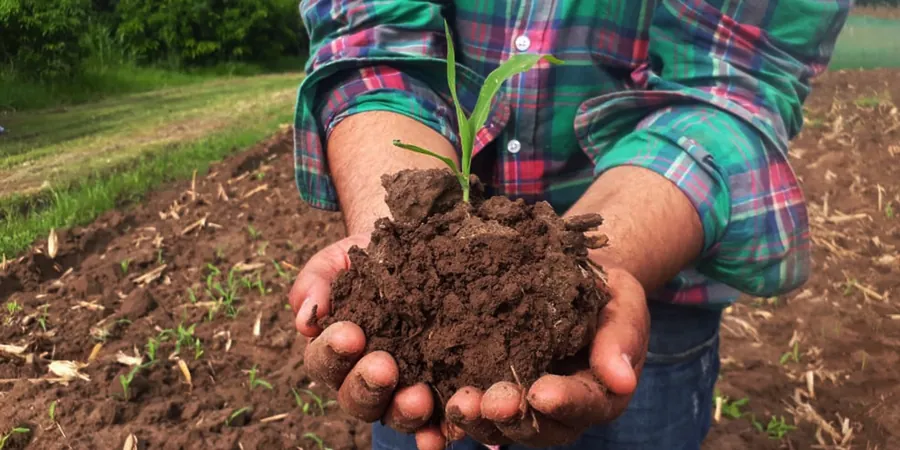
In Airdrie’s organic zones, moisture content can exceed 300% — ignoring that number can sink a project’s budget within months.
Methodology applied in Airdrie
- Organic content percentage (loss on ignition at 440°C)
- Natural moisture content (often >200% in peat)
- Undrained shear strength via vane shear or triaxial
- Fiber content and degree of humification (von Post scale)
Working video
Risks and considerations in Airdrie
Airdrie’s population has grown from 28,000 in 2006 to over 75,000 today, pushing development into former wetlands and peatlands east of the city core. These organic soils are highly compressible and prone to long-term creep settlement. If you build on untreated organic ground, expect differential settlement cracks in foundations, slabs, and pavements within two to five years. In extreme cases, bearing failure can occur during construction itself. Proper organic soil management prevents these outcomes. We have seen projects saved by preloading with geotextiles or excavation and replacement down to mineral soil. The cost of remediation after construction is always higher than doing it right from the start.
Our services
Our organic soil management services in Airdrie cover the full cycle, from field investigation to treatment recommendations.
Site Investigation & Sampling
We perform test pits, hand auger borings, and thin-wall tube sampling for undisturbed peat cores. Field vane shear tests measure undrained strength directly in the organic layer.
Laboratory Classification & Testing
Our ISO 17025 accredited lab runs loss-on-ignition, fiber content, von Post humification, pH, consolidation, and triaxial tests on organic soil samples. Results are delivered within 10 business days.
Treatment Design & Recommendations
Based on lab data, we recommend excavation depth, surcharge height, vertical drain spacing, or chemical stabilization dosage. We also provide settlement estimates under working loads.
Common questions
What is the typical cost for organic soil management in Airdrie?
For a standard residential lot (0.2–0.5 ha) with 2–3 m of peat, the investigation and testing phase ranges from CA$1,250 to CA$3,100. This includes field work, lab tests, and a report with treatment recommendations. Full excavation and replacement can add CA$15,000–$40,000 depending on volume and disposal fees.
How deep are organic soils typically found in Airdrie?
Depths vary by location. Near Nose Creek and east of Highway 2, peat and muskeg layers are commonly 1.5–4.0 m thick. In older residential areas built on glacial till, organic layers are absent or less than 0.5 m. A site-specific investigation is the only way to confirm.
Can I build directly on peat if I compact it?
No. Compaction alone does not stabilize peat because its fibers rebound and creep over time. Even after heavy preloading, peat can settle 10–20% of its thickness over 5–10 years. Excavation and replacement, surcharging with vertical drains, or chemical solidification are the proven methods for building on organic soils.