Airdrie sits on glacial till and lacustrine deposits, with a semi-arid climate that sees freeze-thaw cycles well into spring. These conditions directly influence geomembrane performance—especially when lining ponds, stormwater basins, or landfill caps. A proper geomembrane specification must account for subgrade settlement potential, UV exposure duration, and chemical compatibility with local groundwater. We integrate site-specific data from test pits and soil classification to recommend the right polymer type and thickness. Before finalizing a geomembrane specification, many clients pair it with a geotextile separation layer to protect the membrane from puncture and a resistivity survey to detect leaks post-installation. Getting the spec wrong in Airdrie means premature cracking or uplift during Chinook wind events.
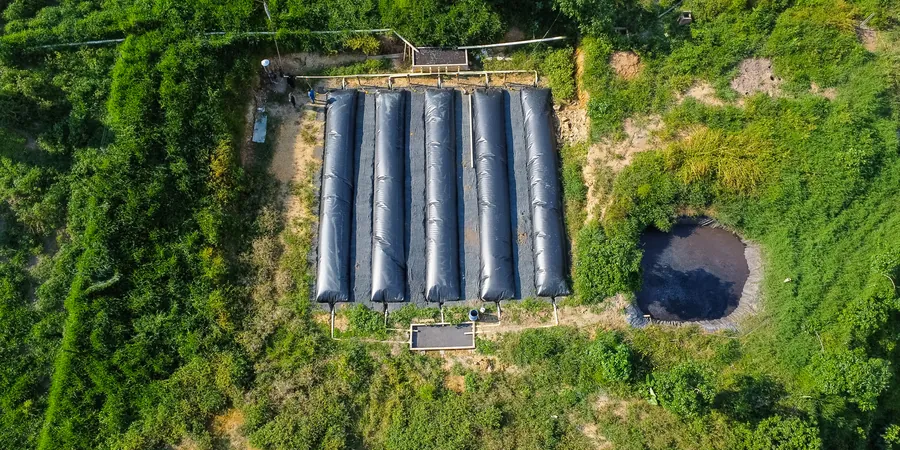
A well-written geomembrane spec prevents 90% of field failures—polymer choice and seam testing are the two non-negotiables.
Methodology applied in Airdrie
- Material grade and additive package (UV stabilizers, antioxidants)
- Seaming method (extrusion or thermal wedge) with trial weld protocol
- QA/QC plan with peel and shear testing per ASTM D6392
- Anchorage details for wind uplift resistance
Risks and considerations in Airdrie
A common mistake in Airdrie is specifying a geomembrane without considering the local clay-rich subgrade. When the clay swells during spring thaw, it can exert enough stress to tear an underspecified 0.75 mm HDPE liner. The difference between the northeast industrial park and the newer developments near Big Hill Springs Provincial Park is striking—the former sits on dense till with low shrink-swell, while the latter has pockets of high-plasticity clay. A generic geomembrane specification copied from another region will fail here. We always run Atterberg limits on the subgrade before writing the spec, and adjust the puncture resistance requirement accordingly. Ignoring this step leads to costly repairs within the first two years.
Our services
We offer four core specification services tailored to Airdrie's typical project types. Each service includes material selection, draft spec, and compliance check against applicable ASTM and GRI standards.
Pond Liner Specification
For stormwater management ponds and irrigation reservoirs. We define polymer type, thickness, and subgrade preparation requirements. Includes hydraulic design check for head pressure and wave action.
Landfill Cap & Liner Spec
Municipal and industrial landfill applications. Specification covers multi-layer systems: gas collection, leachate drainage, primary and secondary geomembranes, and cover soil. Integrated with local groundwater monitoring plans.
Secondary Containment Spec
For fuel storage, chemical tanks, and industrial yards. We specify chemical resistance per EPA 9090, diked area dimensions, and leak detection system interfaces. Full compatibility report included.
Temporary Cover Specification
Short-term erosion control and stockpile covers. Uses lighter grades (0.75 mm – 1.0 mm) with sacrificial UV layer. Spec includes anchor trench details and wind load calculations for Airdrie's Chinook-prone climate.
Common questions
What is the difference between HDPE and LLDPE geomembranes?
HDPE offers higher chemical resistance and tensile strength, making it suitable for leachate and hydrocarbon containment. LLDPE is more flexible and conforms better to uneven subgrades, ideal for ponds and canals. In Airdrie's freeze-thaw environment, LLDPE often performs better on clay subgrades because it accommodates differential settlement without cracking.
How thick should a geomembrane be for a farm pond near Airdrie?
For a typical irrigation or livestock pond in the Airdrie area, 1.0 mm (40 mil) HDPE or LLDPE is the minimum recommended thickness. If the pond will be fished or walked on by cattle, increase to 1.5 mm (60 mil). The spec must also include a geotextile cushion layer to protect against puncture from the underlying glacial till.
What ASTM standards apply to geomembrane installation in Alberta?
Key standards include ASTM D6392 for seam testing, ASTM D6693 for tensile properties, and ASTM D7238 for UV resistance. Alberta's Occupational Health and Safety Code also requires a documented QA/QC plan. For municipal projects, the spec typically references GRI-GM13 for HDPE and GRI-GM17 for LLDPE materials.
How much does a professional geomembrane specification cost?
The typical fee for a complete specification package in Airdrie ranges from CA$960 to CA$2,510, depending on project complexity, number of liner layers, and whether laboratory testing of the subgrade is included. This includes site-specific material selection, draft spec, and one revision cycle. Additional lab work is billed separately.
Why does Airdrie require a site-specific geomembrane spec?
Airdrie's soils vary from dense glacial till to high-plasticity clay within a few kilometers. A generic spec fails to account for shrink-swell potential, puncture risk from angular gravel, and wind uplift during Chinooks. Site-specific data from test pits and Atterberg limits ensures the geomembrane is matched to the actual ground conditions, reducing long-term failure risk.