Geophysics in Airdrie represents a sophisticated branch of earth science that applies non-invasive survey techniques to investigate subsurface conditions without disturbing the ground. This category encompasses a range of specialized services designed to map soil strata, detect buried utilities, identify voids or anomalies, and characterize geological formations critical for safe and efficient construction. In a rapidly expanding city like Airdrie, where residential subdivisions, commercial developments, and infrastructure upgrades are constant, understanding what lies beneath the surface is not just a technical advantage but a regulatory and financial necessity. By leveraging methods such as electrical resistivity testing and electromagnetic scanning, geophysics provides engineers, planners, and developers with actionable data that traditional intrusive investigations often miss.
The local geology of Airdrie presents unique challenges that make geophysical surveys particularly relevant. The area is underlain by glacial deposits typical of the Western Canada Sedimentary Basin, including till, clay, silt, sand, and gravel layers deposited during the last glaciation. These unconsolidated sediments can vary dramatically in thickness and composition over short distances, leading to differential settlement risks and unpredictable bearing capacities. Additionally, shallow bedrock of the Paskapoo Formation is encountered in many parts of the city, creating refusal issues for foundations and utilities. High groundwater tables in low-lying areas near Nose Creek further complicate excavation and require careful drainage planning. Ground Penetrating Radar surveys excel in mapping these abrupt transitions and detecting water-saturated zones without the need for boreholes, saving time and reducing site disturbance.
Canadian and Albertan regulations mandate thorough subsurface investigation before construction begins, and geophysics plays a key role in meeting these requirements. The National Building Code of Canada (NBC), as adopted by Alberta, requires a geotechnical investigation for all buildings, with specific reference to CSA A23.3 for concrete design and CSA S6 for bridges. In Airdrie, the City's Land Use Bylaw and engineering standards often stipulate that developers must identify and map all existing utilities, potential contamination, and geological hazards prior to breaking ground. Geophysical methods are explicitly recognized in CSA Z768 for Phase I Environmental Site Assessments, and when combined with targeted drilling, they satisfy the due diligence expected under the Alberta Environmental Protection and Enhancement Act. Professional geoscience work must be conducted or supervised by a Professional Geoscientist (P.Geo.) registered with the Association of Professional Engineers and Geoscientists of Alberta (APEGA), ensuring that all geophysical data is interpreted to a legally defensible standard.
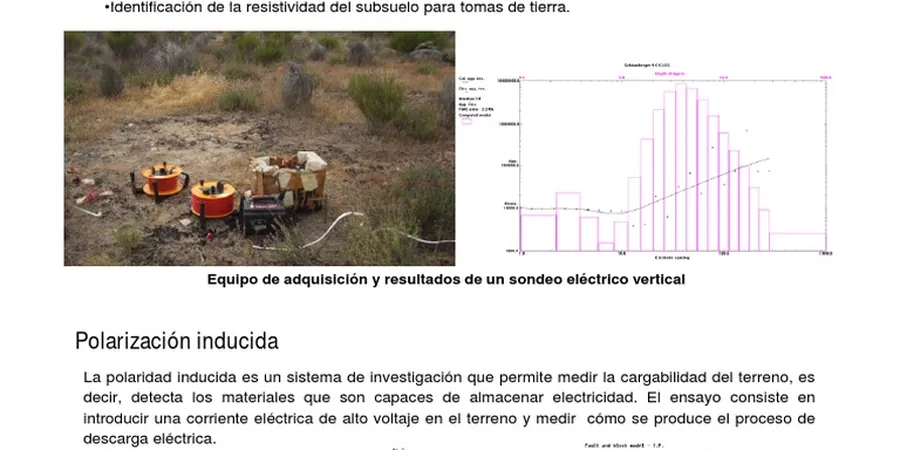
A wide array of project types in Airdrie directly benefit from this category of services. Pre-construction site assessments for new housing developments rely heavily on Vertical Electrical Sounding to delineate soil layering and estimate depth to bedrock, reducing the number of boreholes required. Infrastructure projects, such as the expansion of the 40 Avenue corridor or new stormwater management facilities, use geophysics to avoid conflicts with existing utilities and to assess the integrity of backfill materials. Environmental consultants turn to GPR scanning when investigating potential contaminant plumes or locating underground storage tanks at former gas station sites. Even residential homeowners building additions or installing geothermal loops can use shallow geophysical scans to locate buried services and assess soil stability. In every case, integrating geophysical data early in the planning process reduces the risk of costly change orders, construction delays, and safety incidents.
Common questions
What is the main purpose of a geophysical survey in Airdrie?
The primary purpose is to non-invasively map subsurface conditions such as soil layering, bedrock depth, groundwater levels, and buried utilities before construction begins. This helps developers and engineers in Airdrie comply with Alberta building codes, reduce geotechnical uncertainty, and avoid costly surprises during excavation, ensuring safer and more economical project delivery.
How do local soil conditions in Airdrie affect the choice of geophysical method?
Airdrie's glacial till, clay, and sand deposits, along with shallow Paskapoo Formation bedrock, create variable ground conditions. Electrical resistivity works well for differentiating clay from sand and estimating bedrock depth, while GPR is effective in sandy, dry soils but may have limited penetration in conductive clay, requiring careful method selection based on site-specific geology.
Are geophysical surveys accepted by Airdrie's building permit authorities?
Yes, when conducted under the supervision of a licensed APEGA Professional Geoscientist, geophysical data is accepted as part of the geotechnical investigation required for permit applications. The City of Airdrie recognizes these methods as valid for identifying subsurface hazards and utilities, provided the report meets the standards outlined in the Alberta Building Code and local engineering specifications.
When should geophysical investigation be scheduled in a typical Airdrie development project?
Ideally, geophysical surveys should be integrated into the preliminary site assessment phase, before detailed design begins. Early scanning allows project teams to identify constraints like buried utilities, high groundwater, or shallow bedrock that influence foundation design, site grading, and utility routing, preventing redesigns and delays during the construction stage.