Geotechnical investigation in Airdrie forms the essential foundation for any construction project, providing critical data about subsurface conditions that directly influence design, safety, and long-term performance. This category encompasses a systematic process of exploring, sampling, and testing soil, rock, and groundwater to evaluate their engineering properties. In a rapidly growing city like Airdrie, where residential subdivisions, commercial developments, and infrastructure expansions are constant, understanding what lies beneath the surface is not just a regulatory requirement but a fundamental risk management practice. A thorough investigation identifies potential hazards such as expansive clays, shallow water tables, or variable bearing capacities that could compromise structural integrity if left unaddressed.
Airdrie's geological setting presents specific challenges that make local expertise invaluable. The city sits within the Western Canada Sedimentary Basin, underlain primarily by glacial till, lacustrine clays, and alluvial deposits from the Nose Creek and its tributaries. These Quaternary sediments can vary dramatically over short distances, with lenses of soft clay or silt interspersed within stiffer till. The near-surface geology often includes high-plasticity clays susceptible to volume changes with moisture fluctuation, a critical consideration for foundation design. Additionally, the local water table can be relatively shallow in low-lying areas, requiring careful assessment for basement construction, excavation dewatering, and long-term drainage planning.
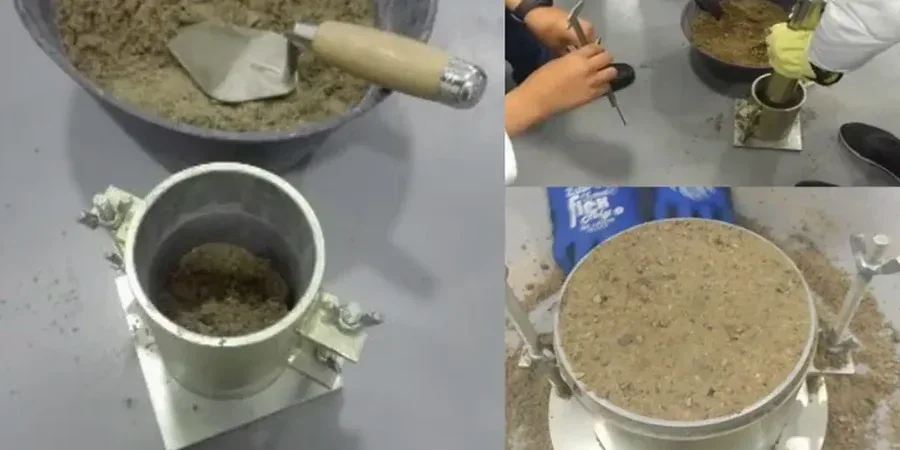
All investigation work in Airdrie must comply with the Alberta Building Code and relevant Canadian Standards Association guidelines, particularly CSA A23.3 for concrete design and CSA S6 for bridge structures where applicable. The Association of Professional Engineers and Geoscientists of Alberta (APEGA) governs professional practice, requiring that geotechnical investigations be conducted or directly supervised by licensed professionals. Field testing methods, such as the Standard Penetration Test (SPT), must follow ASTM D1586 procedures to ensure consistent, reliable data. Laboratory testing on collected samples adheres to ASTM and CSA standards for classification, strength, and consolidation parameters, forming the basis for geotechnical recommendations that engineers of record rely upon.
The scope of projects requiring comprehensive investigation in Airdrie is broad. Low-rise residential developments need assessments for footing design and slab-on-grade performance, particularly given the area's clay-rich soils. Multi-story commercial buildings and industrial facilities demand deeper boreholes and advanced testing to evaluate settlement potential and lateral earth pressures. Infrastructure projects such as roadways, stormwater management ponds, and utility corridors require investigation for subgrade stability, trench safety, and pipe bedding design. Even smaller-scale additions or retaining walls benefit from targeted investigation to avoid costly failures. The data gathered informs critical decisions on foundation type, allowable bearing pressures, seismic site class, and construction methodology, ultimately protecting both investment and public safety.
Available services
Common questions
When is a geotechnical investigation required for a project in Airdrie?
A geotechnical investigation is required for most construction projects under the Alberta Building Code, including new buildings, additions, and significant renovations. It is essential when developing land, constructing foundations, or building near slopes or watercourses. The scope depends on project complexity and site conditions, but any structure requiring a professional engineer's involvement will typically need at least a preliminary subsurface assessment to inform design and obtain permits.
What factors affect the depth and scope of a geotechnical investigation?
Investigation depth and scope are influenced by the proposed structure's loads, footprint, and sensitivity to settlement. In Airdrie, local geology plays a major role; areas with thick clay deposits may require deeper boreholes to assess consolidation settlement. The presence of a shallow groundwater table, proximity to Nose Creek, or planned basements will also dictate sampling intervals and instrumentation needs. The geotechnical engineer determines the final program based on project-specific risks and code requirements.
How long does a typical geotechnical investigation take in Airdrie?
Fieldwork for a standard residential or commercial investigation often takes one to three days, depending on access and the number of boreholes or test pits. Laboratory testing may require two to four weeks for routine classification and strength tests, though more advanced consolidation or triaxial testing extends this timeline. The final report, including analysis and recommendations, is typically delivered within four to six weeks after fieldwork completion, subject to lab scheduling and project complexity.
What are common soil-related challenges for foundations in Airdrie?
Airdrie's common soil challenges include expansive, high-plasticity clays that swell when wet and shrink when dry, potentially causing foundation movement. Variable glacial till with lenses of soft, compressible silt or clay can lead to differential settlement. Shallow groundwater in some areas complicates excavation and requires waterproofing considerations. A proper investigation identifies these conditions early, allowing engineers to recommend solutions like deepened footings, geotextile reinforcement, or specific drainage measures.