Airdrie’s growth has pushed development onto areas where fill thickness varies significantly between older sectors like the downtown core and newer subdivisions such as Canals or Chinook Winds. In the northern districts, fills often consist of glacial till reworked during grading, while southern zones may contain legacy fills from previous agricultural or pit operations. This variability demands a site-specific approach to evaluate bearing capacity and settlement before designing shallow or deep foundations. Without a proper characterization of fill composition, compaction effort, and moisture regime, the risk of differential movement increases. That is why foundations on fill (analysis) in Airdrie must begin with a thorough review of placement history and in-situ density verification.
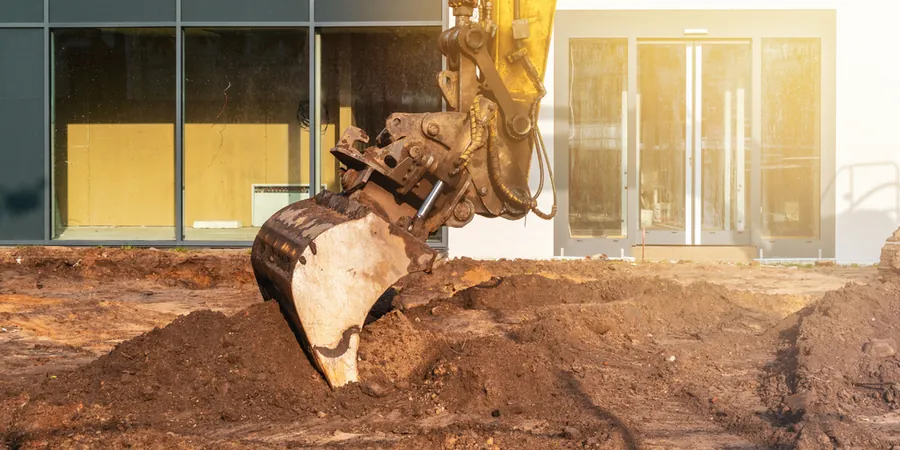
Non-engineered fills in Airdrie older subdivisions can exhibit settlement ratios 2–3 times higher than controlled fills, making compaction verification the critical first step in foundation design.
Methodology applied in Airdrie
Risks and considerations in Airdrie
Airdrie’s urban expansion since the 1990s has placed thousands of homes on fills that were often placed with minimal geotechnical oversight. In areas like the original townsite, old gravel pits were backfilled with a mix of clay, sand, and demolition debris before modern compaction standards existed. These non-engineered fills pose two main risks: sudden settlement under load and differential movement between adjacent footings. Foundations on fill (analysis) in Airdrie must therefore include an assessment of collapse potential upon wetting, as Alberta’s semi-arid climate can shift to heavy spring rains that saturate poorly compacted fills. Ignoring these legacy fills can lead to structural damage that is expensive to repair and difficult to attribute without a baseline study.
Our services
Our analysis of foundations on fill in Airdrie includes the following core services, each tailored to the specific fill conditions encountered on site.
Fill History Review and Site Reconnaissance
Review of aerial imagery, grading records, and previous soil reports to classify fill origin and placement method.
In-Situ Density and Compaction Testing
Nuclear densometer or sand cone tests at multiple depths to verify compaction against Standard or Modified Proctor maximum dry density.
Collapse Potential and Settlement Analysis
Double-odometer collapse tests (ASTM D5333 (CFEM Ch 4) (CFEM Ch 4) (CFEM Ch 4) (CFEM Ch 4) (CFEM Ch 4)) and one-dimensional consolidation modelling to estimate long-term settlement under foundation loads.
Bearing Capacity and Foundation Recommendations
Calculation of allowable bearing capacity for shallow and deep foundations, including recommendations for Improvement if required.
Common questions
How is a non-engineered fill different from an engineered fill for foundation design in Airdrie?
Non-engineered fills were placed without compaction control, often with variable materials and moisture conditions. Engineered fills are placed in lifts at a specified moisture content and compacted to at least 95% Standard Proctor. The main difference for foundations on fill (analysis) in Airdrie is the risk of sudden collapse settlement in non-engineered fills under foundation loads.
What collapse potential index should trigger Improvement for a fill site in Airdrie?
A collapse potential index above 2% (per ASTM D5333 (CFEM Ch 4) (CFEM Ch 4) (CFEM Ch 4) (CFEM Ch 4) (CFEM Ch 4)) generally indicates a moderate to severe risk of settlement upon wetting. For residential foundations on fill (analysis) in Airdrie, values above 1% may already warrant pre-wetting, dynamic compaction, or removal and re-compaction of the upper fill layer.
Can shallow spread footings be used on fill in Airdrie if the compaction is verified?
Yes, provided the fill is engineered to at least 95% Standard Proctor maximum dry density and the fill thickness is less than about 3 m. The foundation on fill (analysis) must confirm that the bearing capacity is sufficient (typically 100–200 kPa) and that total and differential settlements remain within acceptable limits for the proposed structure.
What is the typical cost range for a foundations on fill analysis in Airdrie?
The cost for a complete foundations on fill (analysis) in Airdrie typically ranges between CA$1,100 and CA$3,930, depending on the number of test pits, laboratory tests, and the complexity of the fill layer. This includes field work, collapse testing, and a report with bearing capacity and settlement recommendations.